[ THE_SHORT_ANSWER ]
A Product Blueprint is a fixed-price, time-boxed planning sprint (two sessions across roughly two weeks) that replaces the assumptions in a software brief with decisions: what to build first, what to cut, what it will cost, and whether the investment is worth making. You receive a written document, not a prototype. You can hand it to any development team to build from, or use it to decide not to build at all.
Most software projects fail before a line of code is written.
The Standish Group’s CHAOS Reports, which have tracked software project outcomes for decades, consistently find that only around 31% of software projects succeed as originally scoped. The primary causes are not bad engineering. They are unclear requirements, scope creep, and the wrong product being approved in the first place.
A Product Blueprint is the planning layer designed to change those odds: a structured, time-boxed sprint that answers the questions a founder needs answered before committing development budget, using the judgment of the engineers who would actually build it.
1. What a Product Blueprint actually is
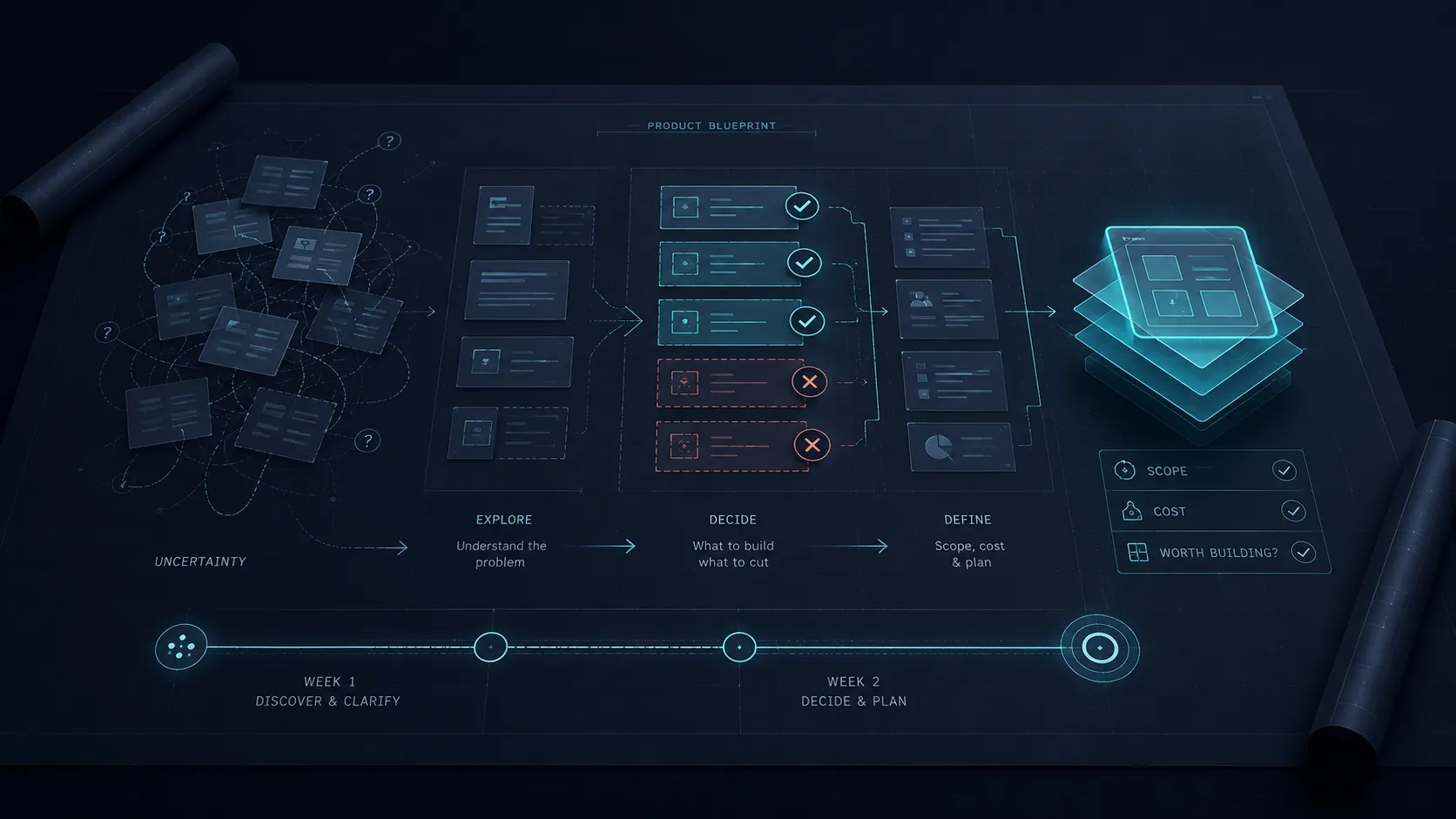
A Product Blueprint is a fixed-price, two-week planning engagement that produces a single written deliverable: a build-ready document that defines what your software product should include, what it should cost to develop, and whether the investment makes sense.
The structure runs across three steps:
- Session one: A 90-minute working session in which an architect walks through your project, business model, target users, data requirements, admin needs, and unknowns, looking specifically for where development spend would be approved on weak assumptions.
- Analysis: The architect who ran the session then maps the real product: viability, value hook, scope, technical direction, operating model, risks, and Phase 1 estimate. This takes roughly two weeks.
- Session two: A second 90-minute session presenting the findings, pressure-testing the plan together, and landing on a clear next step.
The critical distinction: a Product Blueprint is designed by engineers, not strategists. The same people who would build the thing are the ones telling you whether to build it and what it should include. Generic consultants can describe features. Engineers can tell you which features will quietly add three months to your timeline, which assumptions will collapse on first contact with real users, and which architectural decisions made now determine whether the second feature is easier than the first or harder than the first.
2. Why before committing development budget?
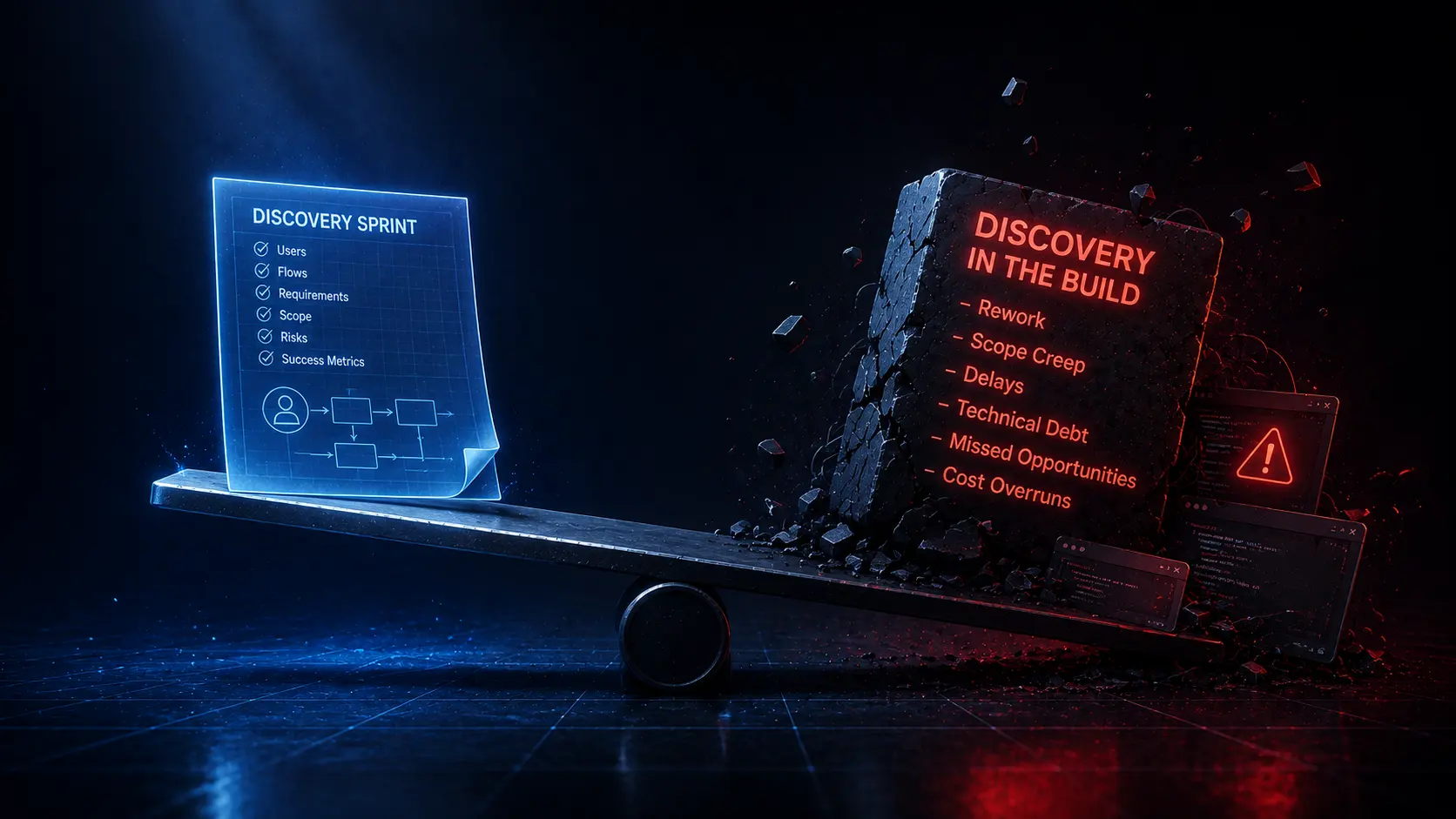
Software investment decisions are made on briefs. Briefs describe the user-facing product: the features, the screens, the scope. The problem is that a brief typically captures around 30% of what determines whether a software product succeeds in the real world.
The other 70% (the painful problem worth solving, the moment that brings users back, the operational workflows, the data rules, the compliance requirements, the admin tooling nobody put in the deck) exists as assumptions at the point the development budget gets approved.
Those assumptions do not stay assumptions. They surface mid-build, as scope surprises, rework, and budget conversations nobody expected to be having. Research by NIST (National Institute of Standards and Technology) found that the cost of fixing a defect identified in production is up to 100 times greater than addressing the same problem during the design phase. The same principle applies to product decisions: reshaping the product on paper, before a single line of code exists, is dramatically cheaper than reshaping it after six months of build.
A Product Blueprint is product due diligence: the work you do before approving development spend, for the same reason you do legal due diligence before signing a contract. The cost of being wrong about the thing you are committing to is high enough to warrant a deliberate check, whether or not you expect disaster.
The framing we use: the most expensive bug in software is building the wrong thing correctly. Six months of competent engineering on a product that did not need to be built, or that needed to be built differently, is the category of failure a Blueprint is specifically designed to catch.
3. What happens during a Product Blueprint?
The two sessions are working sessions, not presentations, and the first is deliberately the more challenging of the two.
Session one: Pressure-test the brief
The architect works through the project with you, asking the questions your brief does not answer. Not to be difficult, but to locate the assumptions hiding inside every specification that has not yet been turned into a build-ready document.
The questions that surface in this session fall into a few predictable categories:
Product viability. Is the problem painful enough that someone would change their behaviour and pay to have it solved? Where is the specific moment that brings a user back a second time: not the features they might use once, but the mechanic that makes the product part of their life? Which of the planned features serve that moment, and which are noise?
Operating model. Who runs this product once it exists? What admin workflows, reporting systems, and support flows need to exist for the product to work in the real world? These are almost never in the brief, because briefs describe what users do, not what operators do.
Technical unknowns. What integrations are assumed? What are the data ownership and partitioning requirements? Are there compliance or regulatory constraints that change the architecture? What does failure look like, and is there a plan for recovery?
Scope honesty. What does Phase 1 actually need to include? What can be cut, faked, or deferred without compromising the product’s ability to succeed? The answer is almost always a sharper, smaller scope than the original brief, because a product that does three things at 95% quality beats a product that does eight things at 60%.
The analysis
After the first session, the architect spends roughly two weeks mapping the findings into the deliverable. This is where engineering judgment compounds: translating a 90-minute conversation and a brief full of implicit assumptions into a written, build-ready specification requires the kind of pattern recognition that only comes from having estimated, architected, and built comparable systems before.
Session two: Decide
The second session presents the findings, works through them together, and lands on a clear recommendation: a direct call on whether this is worth building as scoped, whether the product needs reshaping before development starts, or whether the honest answer is “not yet, and here is why.”
That recommendation is the most valuable part of the Blueprint. It represents engineering judgment applied to the specific risks in your specific project, by someone who has been close enough to enough builds to know where they tend to break.
4. What do you actually receive?
A Product Blueprint produces a single written document, structured to be used rather than presented: to hand to a developer for a quote, to share with a board for approval, or to act as the definitive source of truth for build decisions. It is not a slide deck or a verbal summary.
Included at every tier:
- The Go/No-Go Verdict. A direct call on whether this is worth building as scoped, needs reshaping, or is not worth the spend yet, from someone who has to live with being wrong about it.
- Problem and Hook Check. Whether the problem is painful enough for people to pay or switch for, and where the moment lives that brings them back a second time.
- The Real Phase 1. What ships first, and what gets cut, faked, or pushed to later: usually smaller and sharper than the original brief.
- A Fixed Build Number. A real price to build Phase 1, checked against how the product actually needs to run, not just how it looks in a deck.
Added at the Standard tier:
- Friction and Retention Plan. Where users get stuck or bounce, and the specific mechanic designed to bring them back without you having to engineer it later.
- Admin, Roles, and Data Rules. Who can do what, how data is structured and partitioned, and the back-end workflows nobody puts in a pitch deck but every operator needs on day one.
- Running Costs, In Real Numbers. Hosting, scaling, and third-party API costs translated into a monthly figure, not a footnote discovered six months after launch.
- Risk Register and Roadmap. Every compliance, technical, and adoption risk identified, plus what is deliberately deferred to Phase 2 and why, so later decisions do not undo earlier ones.
Added at the Full tier:
- UI Wireframes. Every core flow laid out screen by screen, so layout and navigation decisions are made before a developer has to guess at them.
- High-Fidelity Mockups. The finished look of the key screens, styled and real, so you are approving a product you can see, not a verbal description of one.
- Analytics and Event Plan. Every interaction worth tracking, mapped to the reporting you will need to know if the retention plan is actually working.
The document is yours unconditionally. If you decide not to build, build with a different team, or pause the project, you keep everything in it. There is no clause that ties the thinking to us.
5. How long does it take, and what does it cost?
The Simple and Standard tiers run across approximately two weeks. The Full tier takes approximately three weeks to accommodate the additional design work.
Simple: R 15,000 ex VAT: For smaller MVPs, internal tools, or early product concepts where the primary risk is approving the wrong Phase 1. Produces the written deliverable and two sessions: functional scope, fixed Phase 1 price, basic technical direction, and a clear recommendation.
Standard: R 30,000 ex VAT (most common): The default for commercial builds where the value hook, multiple user roles, real data, integrations, compliance, or operating risk could materially change the right Phase 1. Adds the operating model, infrastructure assumptions, risk register, and roadmap to the core deliverable.
Full: R 60,000 ex VAT: For larger or design-sensitive builds where screens, flows, analytics, and UX need to be resolved before they become expensive development decisions. Adds UI wireframes, high-fidelity mockups, and an analytics event plan to everything in Standard.
One mechanism worth understanding: if you approve the Phase 1 build with Pocket Dev within 30 days of receiving your Blueprint, 50% of the Blueprint fee is credited directly to your development deposit. The principle is simple: you pay for that strategic thinking once, not twice. The Blueprint is priced as due diligence, not as a separate engagement that doubles your pre-build cost.
6. Who is it for?
A Product Blueprint is the right starting point if any of the following are true:
- You have an app brief, internal tool spec, AI prototype, RFQ, slide deck, or rough idea and are not confident it is ready for a build quote.
- You are not certain the product solves a painful enough problem, or that the brief captures the real value hook and retention mechanic.
- You need a second opinion before committing serious development money.
- You want users to actually come back after launch, not just a product that demos well in week one.
The most common profile is a founder who has spent real time on a product idea, has something to show (a Figma file, a business case, a conversation with a prospective customer) and is approaching the moment of committing to build. They have a sense the idea is right, but are not confident the brief they have is complete enough to hand to a developer and get back something that works in the real world.
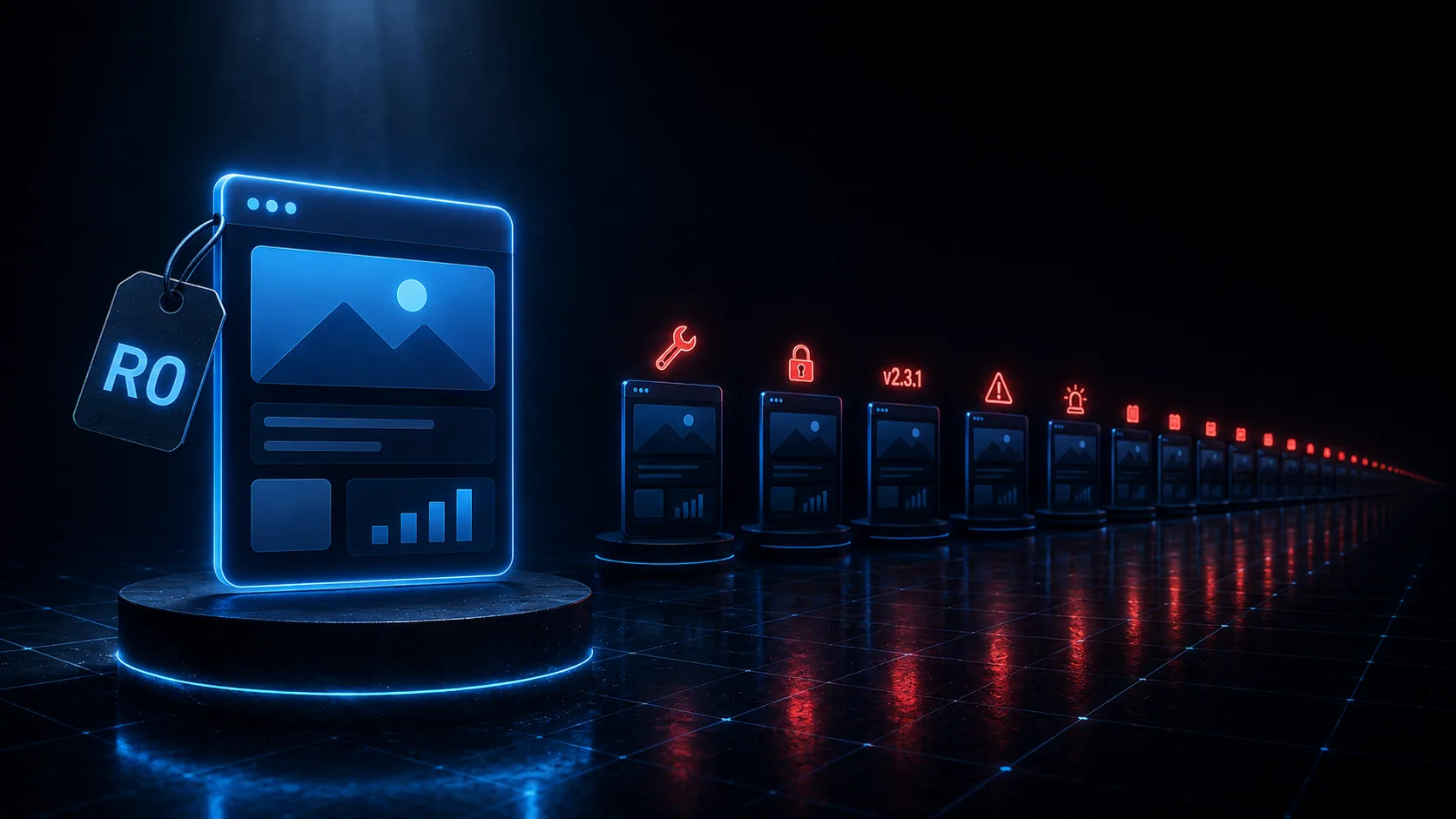
The second common profile is a founder who has already built something (a vibe-coded prototype, an early MVP) and is facing the decision of whether to continue building on the existing foundation or rebuild before scaling. A Blueprint reads the existing architecture and gives a clear answer. We covered why that diagnostic is so important in Vibe Coding 16 Weeks Later: the codebase you have at week eight is rarely what it appears to be from the outside.
7. Is it the same as a prototype or an MVP?
No. These are different things at different stages of a product’s life, and confusing them is expensive.
A prototype is software. It is something a user can click through. A Product Blueprint produces a document. No software is written during a Blueprint. The point is precisely to resolve the product questions before software is written, because software is the expensive part.
An MVP is the smallest version of the product you can build and ship. A Product Blueprint is the planning work that defines what your MVP should be. The Blueprint answers: what should Phase 1 include? What can be cut? What does “minimum” actually mean for this product, given these users, with this business model? Without this work, the MVP is often not minimum at all: it is the first version of a brief that was never pressure-tested.
A discovery workshop is a facilitated session, typically one to five days, that surfaces ideas and aligns teams. A Product Blueprint is not a facilitated workshop. It is a detailed technical and product analysis conducted by the engineers who would build the thing. The deliverable is a build-ready document with a fixed build price, not a whiteboard photo or a shared understanding.
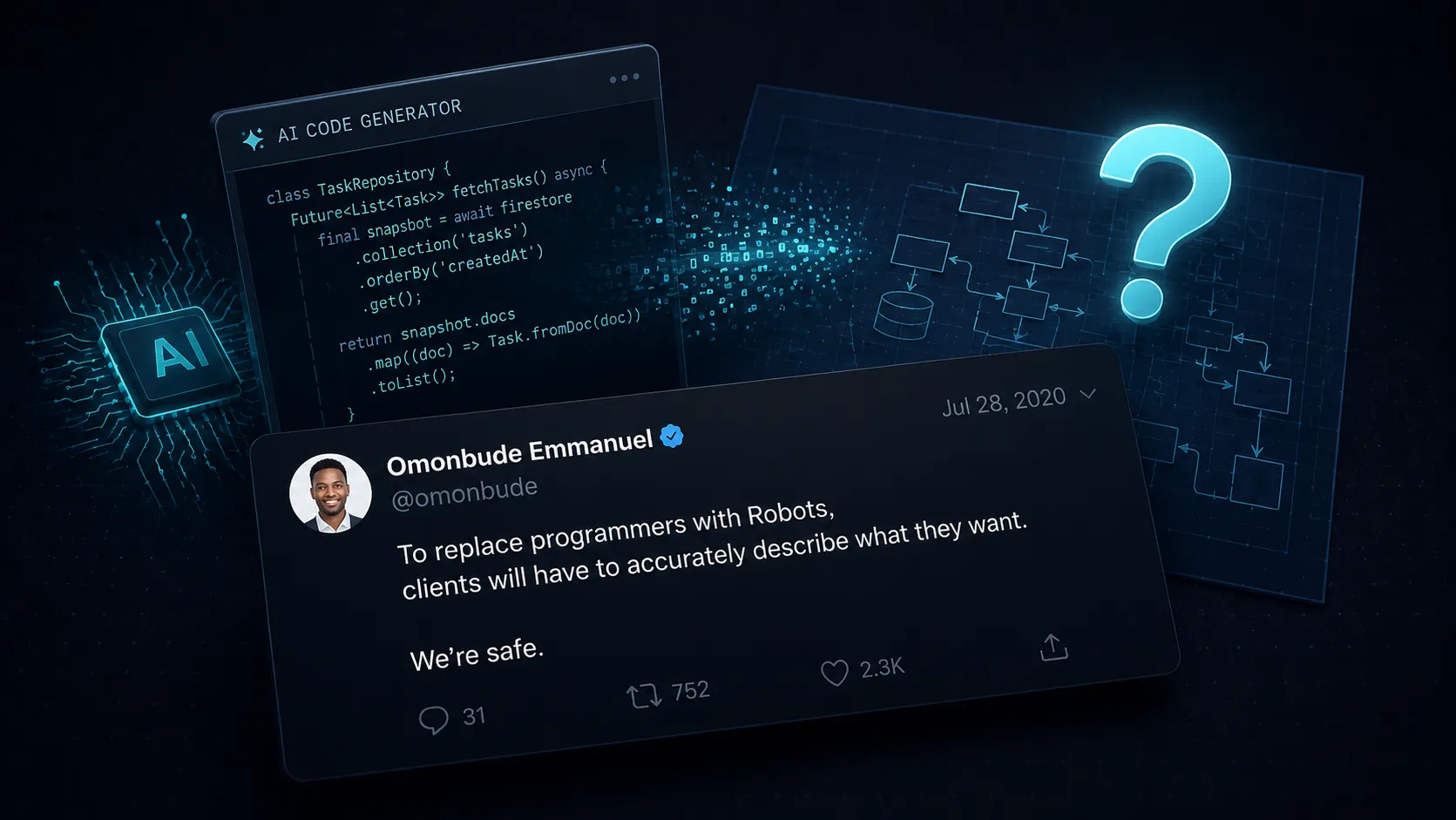
The Blueprint sits between the idea and the build. It is the work that turns a concept into a plan precise enough to price, and a plan precise enough to price into software that can be built with confidence. As we covered in AI Can Write the Code. It Still Can’t Tell You What to Build., the hard part of software in 2026 is the translation from fuzzy intent to precise executable plan, not the generation. The Blueprint is how we do that translation deliberately, before a line of code is written.
8. What happens after the Blueprint?
After the second session, there are three possible paths. All three are legitimate outcomes.
Proceed. You have a build-ready document, a fixed Phase 1 price, and confidence in what you are approving. If you proceed with Pocket Dev within 30 days, 50% of the Blueprint fee is credited to your development deposit. If you build elsewhere, the document is fully yours and can be used to get comparable quotes from multiple teams, often for the first time, because every team is now quoting against the same scope.
Reshape. The Blueprint surfaces something that changes the right build. Maybe the scope was too ambitious for the available budget. Maybe a feature that seemed central is unnecessary for Phase 1. Maybe the business model needs adjusting before the product makes commercial sense. Reshaping on paper is still cheap at this point. Reshaping mid-build is not.
Walk away. This is a legitimate outcome, and sometimes the most valuable one. If the honest answer is that the problem is not painful enough, the market is not ready, or the economics do not work at this scale, the Blueprint surfaces that before you have committed development budget. Spending R 15,000 to R 60,000 to avoid the wrong R 500,000 build is the entire point. A team that cannot give you this answer when the evidence points to it is not doing due diligence. They are selling you a build.
The Blueprint doesn’t commit you to building. It gives you what you need to make that decision, either way, with your eyes open.
9. When you should not do one
A Product Blueprint is not the right starting point in every situation.
If you already have a production-ready technical specification, a stable architecture, and a finalised Phase 1 scope, you probably do not need a Blueprint. You can ask for a build quote directly. The test is honest: if you can hand your current documents to three different development teams and get back three quotes that are genuinely comparable, you have a build-ready spec. If the quotes vary by 200%, you probably do not.
If you are still in the early concept phase (validating whether the problem, audience, or business case is real), a Blueprint is premature. Do that validation first. The Blueprint works best when you are past “should I pursue this idea?” and into “is my plan for pursuing it the right one?”
If you are only looking for the cheapest possible quote, a Blueprint is not the right engagement. The point is to produce a document that enables you to compare quotes fairly, catch hidden scope before it becomes mid-build surprises, and make a confident build decision. If price is the only variable in your decision, none of that work changes your outcome.
The cleanest signal: if your current brief is mostly screens and features, you probably need a Blueprint. If it is a mapped system architecture with clear data flows, defined compliance requirements, a complete operating model, and a finalised Phase 1 scope, ask for a build quote directly.
For a complementary diagnostic you can run before any developer conversation, the two questions in Hiring an App Developer? Two Questions Every Founder Should Ask First take thirty minutes and reveal more about a team’s engineering discipline than most reference checks.
[ NEXT STEP ]
Not sure if your brief is ready for a build quote?
The first step is a free 30-minute scoping call to pressure-test what you have, identify the biggest risk in the brief, and agree on the right next move, before you commit to anything.
BOOK_A_ROADMAP_CALL →