[ POCKET_DEV / JOURNAL ]

Field notes on building software that holds up.

What separates a build that ships well from one that gets quietly rebuilt by the next team sixteen weeks later. Written for the founders deciding what to build, who to hire, and whether the dev team in front of them knows the difference.
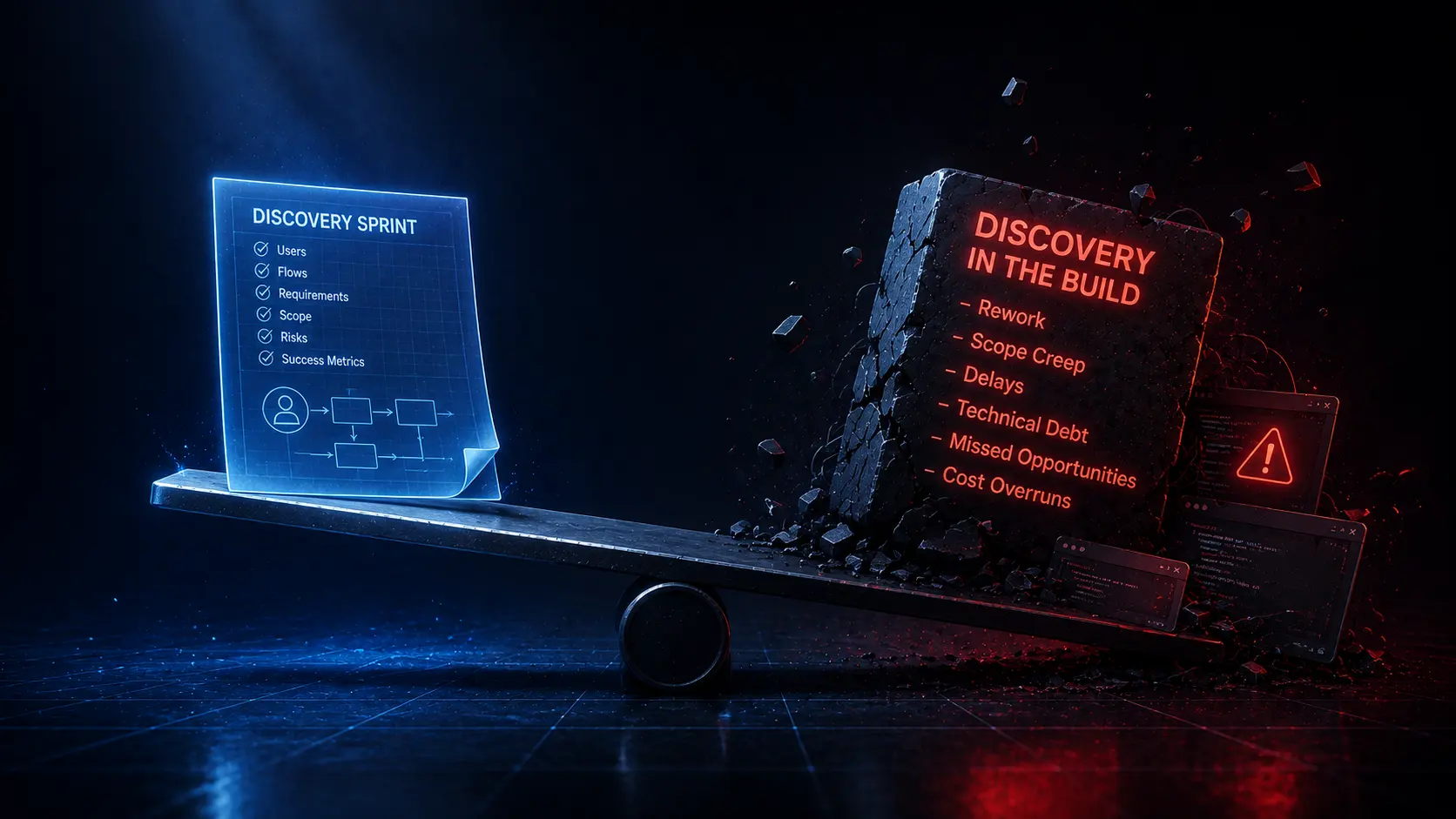
A seesaw with a small glowing blue Discovery Sprint document on the raised side, listing users, flows, requirements, scope, risks and success metrics, outweighed by a massive cracked block of stone in red on the lowered side reading Discovery In The Build, listing rework, scope creep, delays, technical debt, missed opportunities and cost overruns, surrounded by error consoles and a warning icon
[ Product Thinking ]LATEST POST

The Real Cost of Skipping a Discovery Sprint

You never skip discovery. You only choose whether to answer the questions in a document, where changing your mind costs a conversation, or in code, where it costs a refactor and a data migration.

26 August 2026·9 MIN READREAD_ARTICLE →
[ ARCHIVE ]
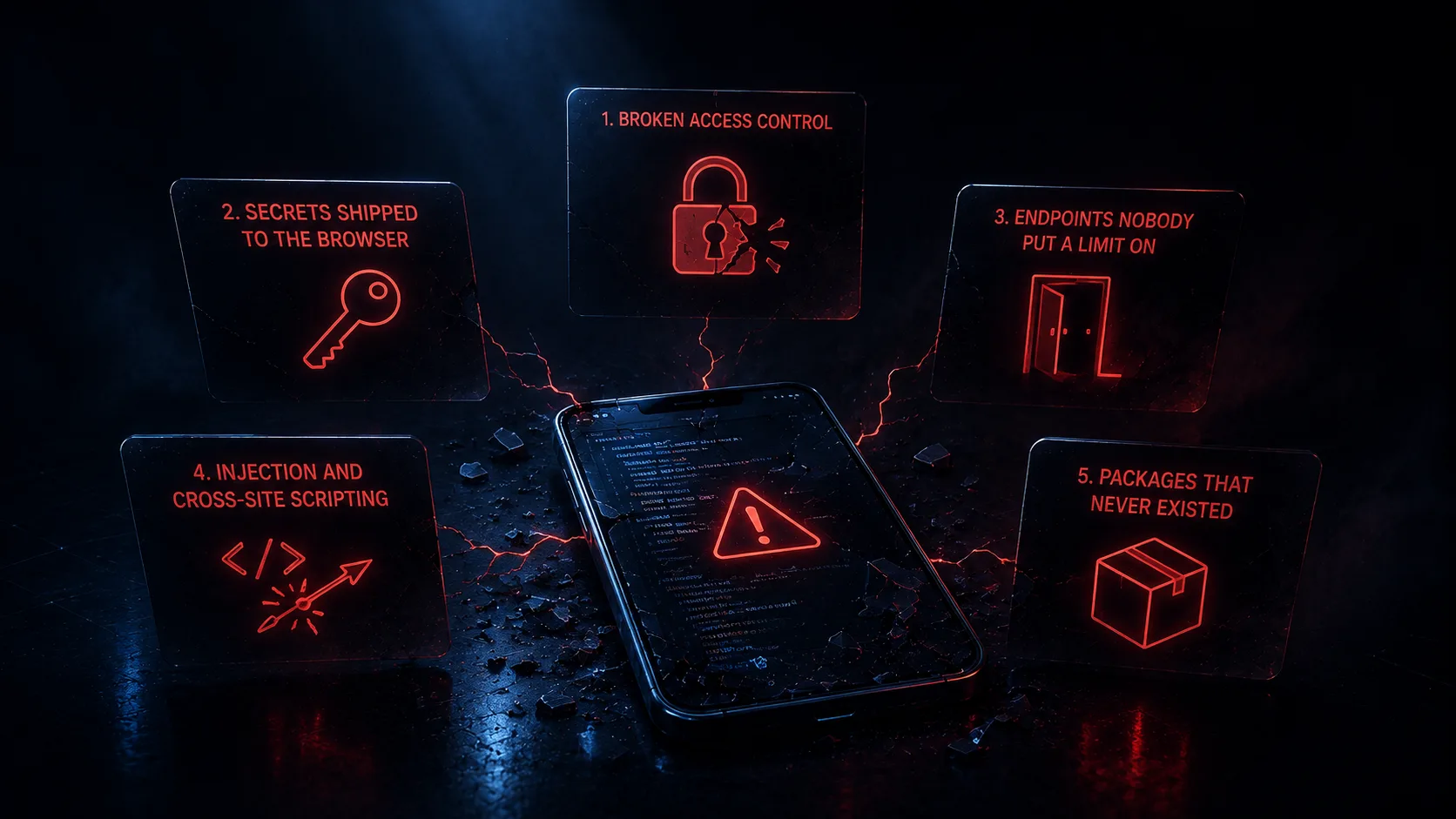
A cracked phone screen on a dark surface with red fracture lines radiating outward to five glowing red panels, each numbered and labelled with an icon: a broken padlock, a key, an open door, an arrow piercing a code bracket, and a package box
[ Engineering Discipline ]

Where Vibe-Coded Apps Actually Break: The Five Failures, Ranked by Frequency

There is now real data on how AI-generated applications fail. Five failure classes, ranked by measured frequency rather than opinion, with the studies attached and the weak numbers flagged as weak.
24 August 2026·8 MIN READREAD →
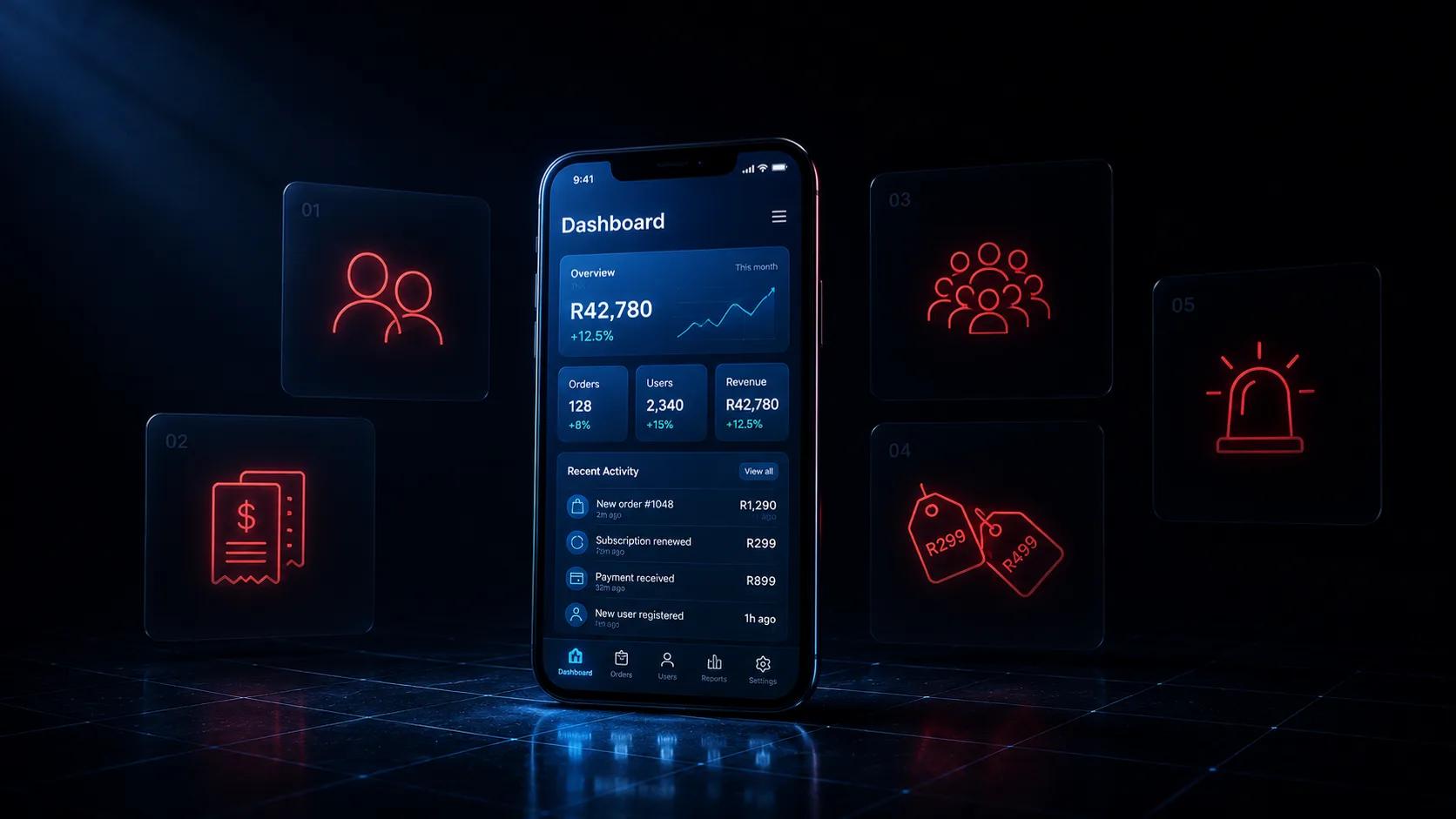
A dark illustration of a phone showing a working app, lit from one side only, with five unlit areas behind it labelled with small icons: two user silhouettes overlapping, a duplicated payment receipt, a crowd, two contradicting price tags, and an unlit warning lamp
[ Engineering Discipline ]

5 Things I'd Check Before Putting an AI-Generated App Into Production

One developer, one account, a good connection, an empty database. That is the only condition your app has ever been tested under, and it is the exact condition that hides everything on this list.
22 August 2026·9 MIN READREAD →
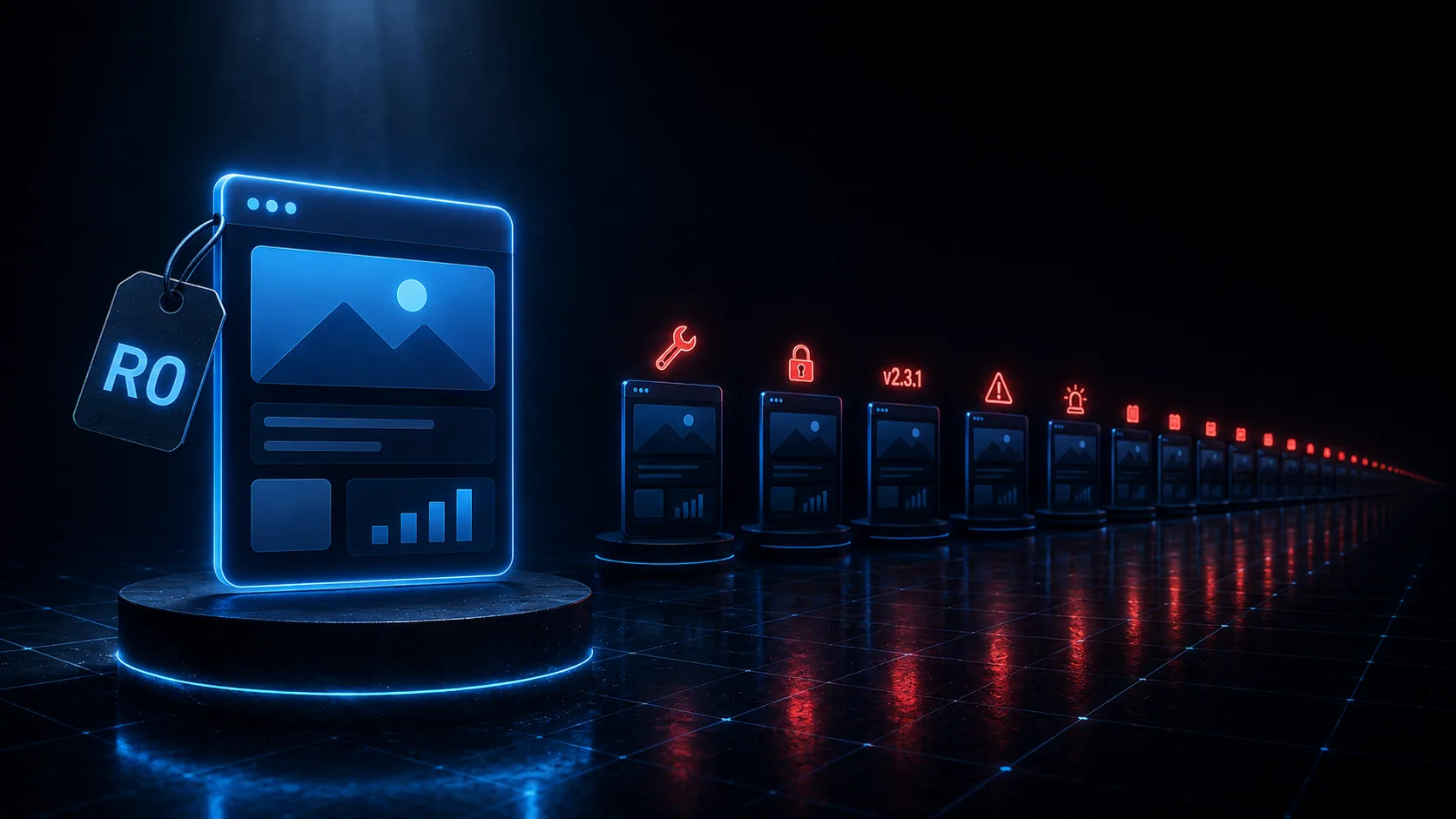
A dark illustration of a glowing blue app window sitting on a pedestal with a price tag reading R0, and stretching away behind it a long dim corridor of smaller identical windows marked with maintenance icons: a wrench, a padlock, a version number, and a red outage light
[ Product Thinking ]

Free as in Puppy: The Real Cost of the Internal Tool You Built in a Weekend

Writing the code got cheap. Owning the code did not. The internal tool you built in a weekend is free the way a puppy is free.
20 August 2026·8 MIN READREAD →
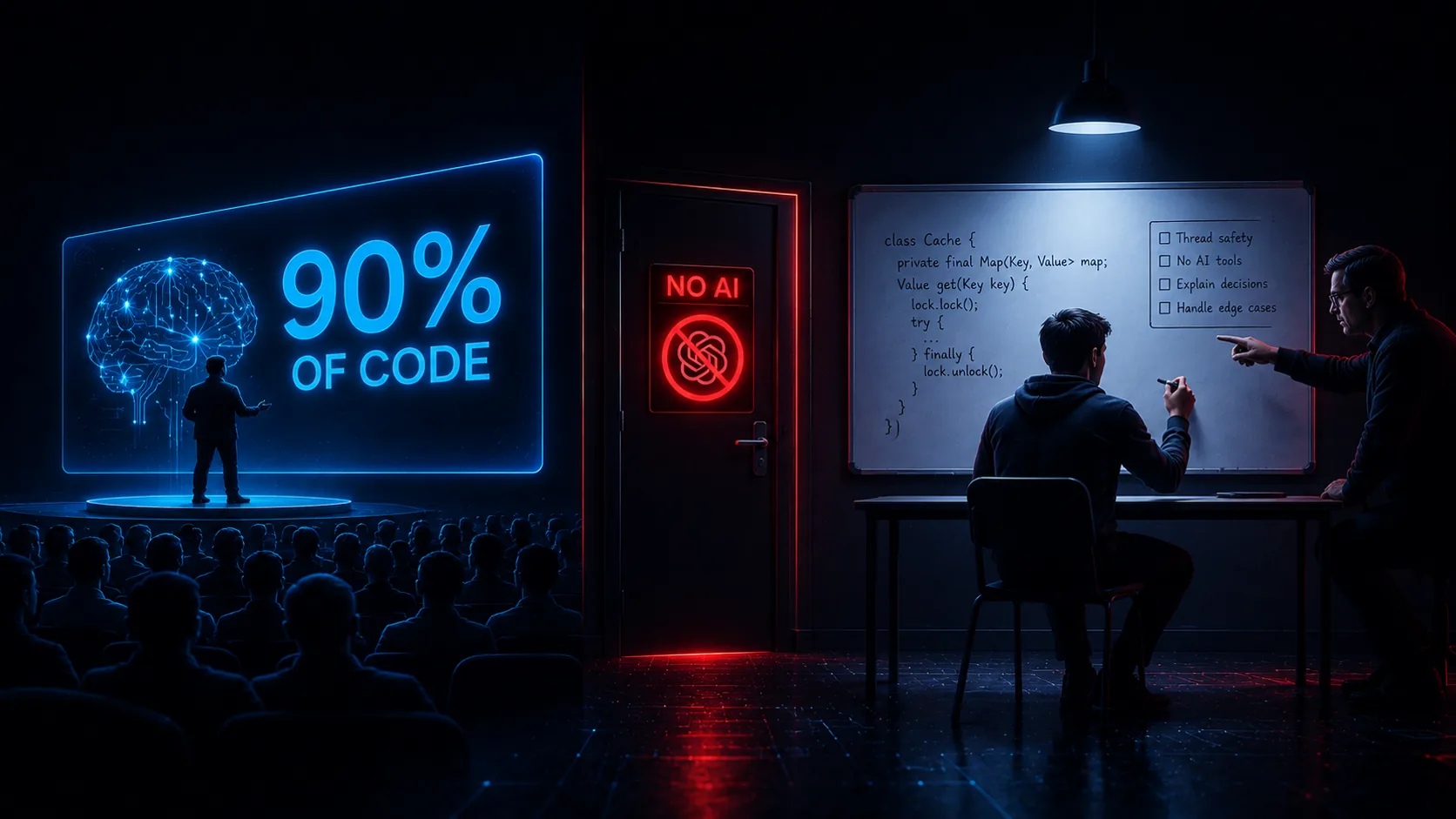
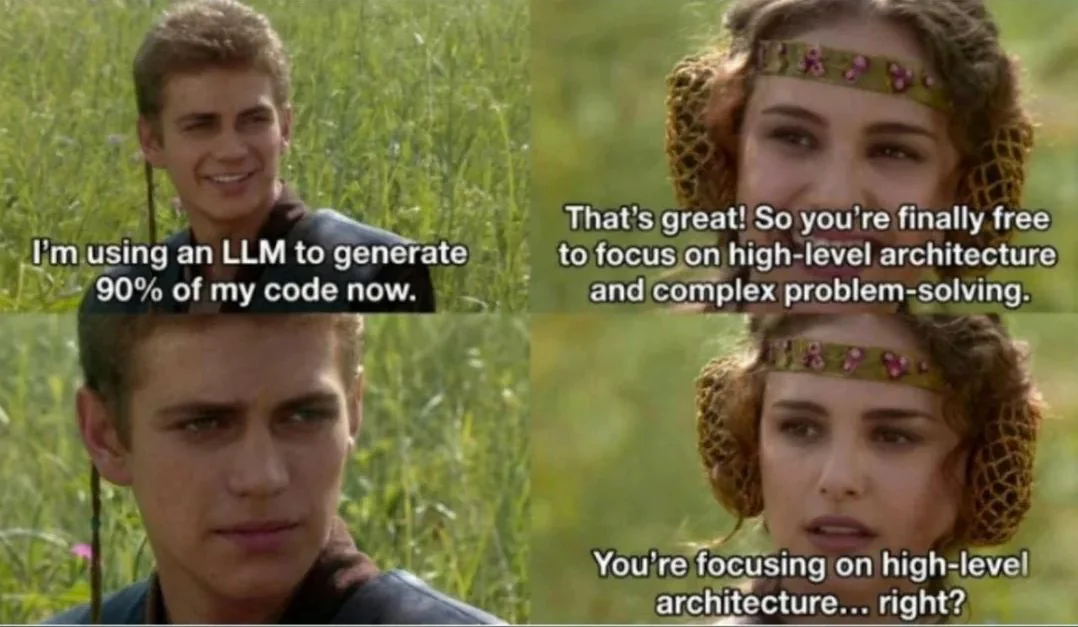
A dark split illustration: on the left a brightly lit conference stage with a speaker and a slide reading '90% OF CODE', on the right a bare interview room where a candidate writes on a whiteboard by hand while an engineer points at one line, with a small red 'NO AI' marker on the door between them
[ Engineering Discipline ]

They Say AI Writes the Code Now. Their Own Interviews Say Otherwise.

Anthropic's CEO said AI would write 90% of code within six months. Anthropic's own hiring policy tells candidates not to use Claude. That gap tells you more about what AI actually changed than any keynote does.
19 August 2026·7 MIN READREAD →
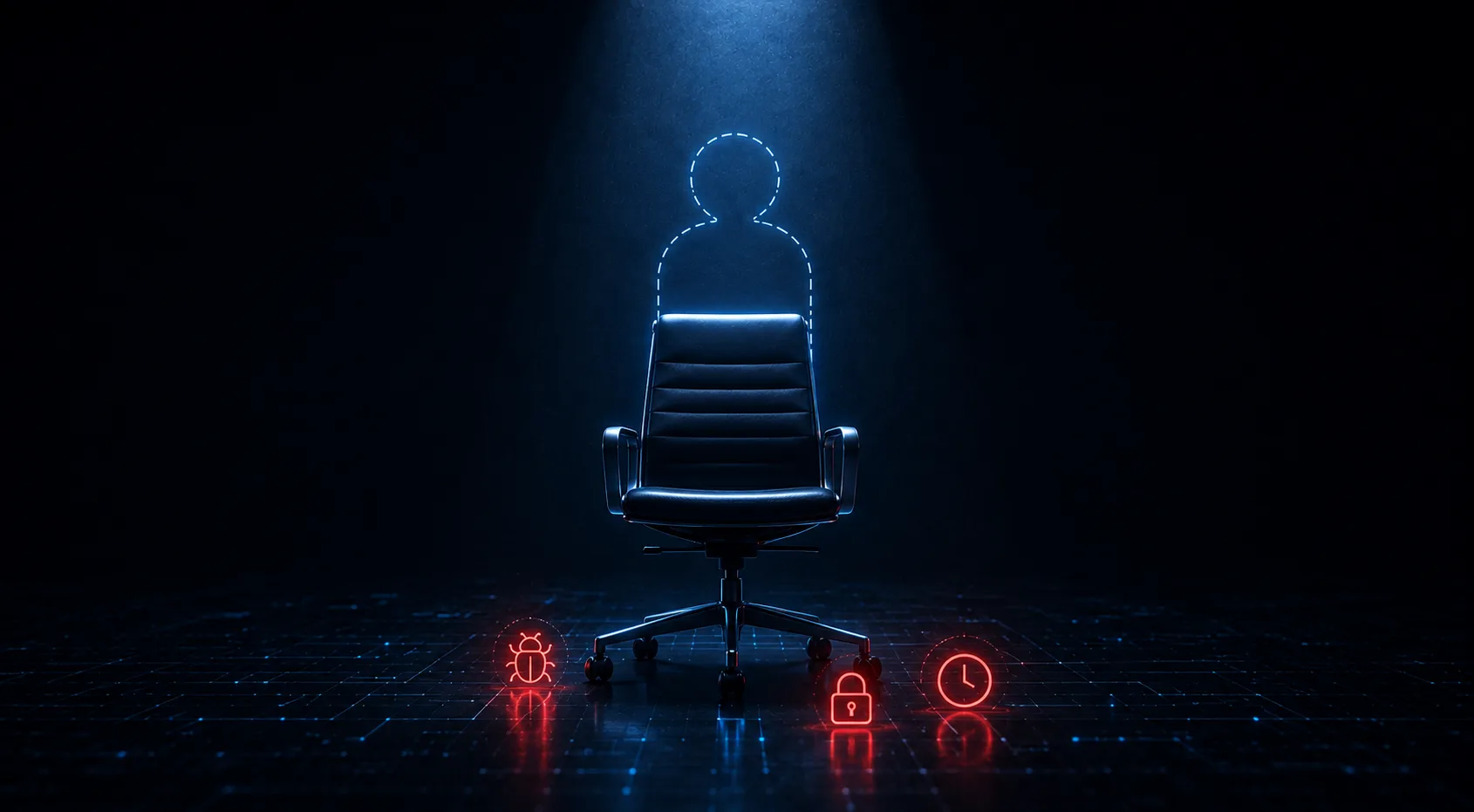
A dark illustration of an empty office chair under a single spotlight, with a dashed blue outline of a person hovering above it where someone should be sitting, and small glowing red icons of a bug, a padlock, and a clock on the floor beside it
[ Engineering Discipline ]

The Senior Engineer You Never Had in the Room

Senior engineers are finding it harder to slow bad ideas down before they ship. Most solo founders never had that voice in the room to begin with, and AI tools make it easy to not notice the gap until the rebuild.
14 August 2026·7 MIN READREAD →
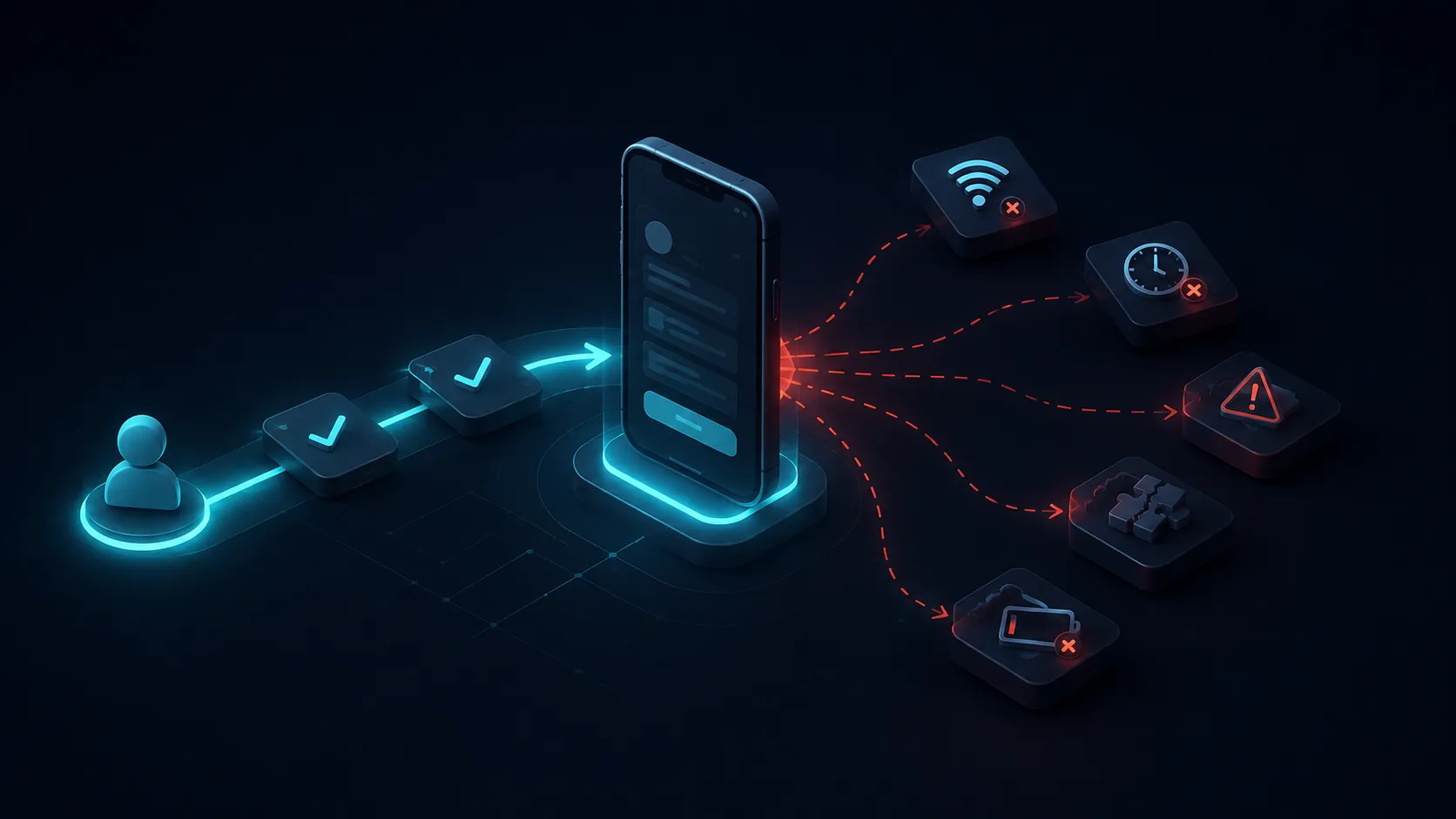
A Flutter app handling an edge case gracefully: offline state, race condition, or network failure caught before the user sees it
[ Flutter ]

The Edge Cases Are the Product

Every user who stopped trusting your app didn't hit a missing feature. They hit an edge case you never handled.
10 August 2026·9 MIN READREAD →
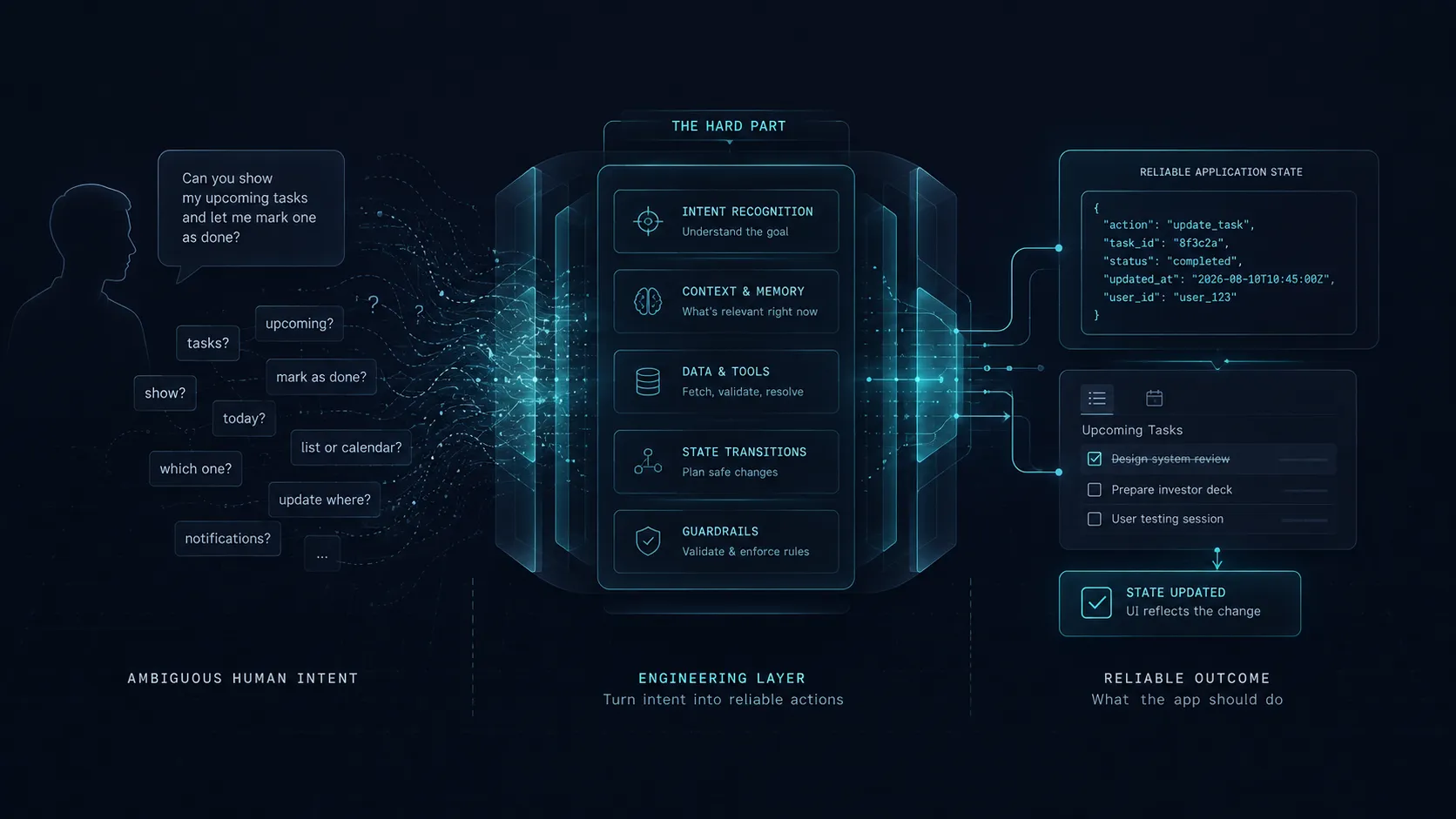
The gap between natural language intent and reliable application state: the real engineering challenge in generative UI
[ GenUI ]

The Hard Part of GenUI Isn't Generating the UI

GenUI frameworks can assemble a UI from a model response. That's the easy part. The hard part is intent, state, and guardrails: the engineering layer between what the user said and what the app does.
10 August 2026·8 MIN READREAD →
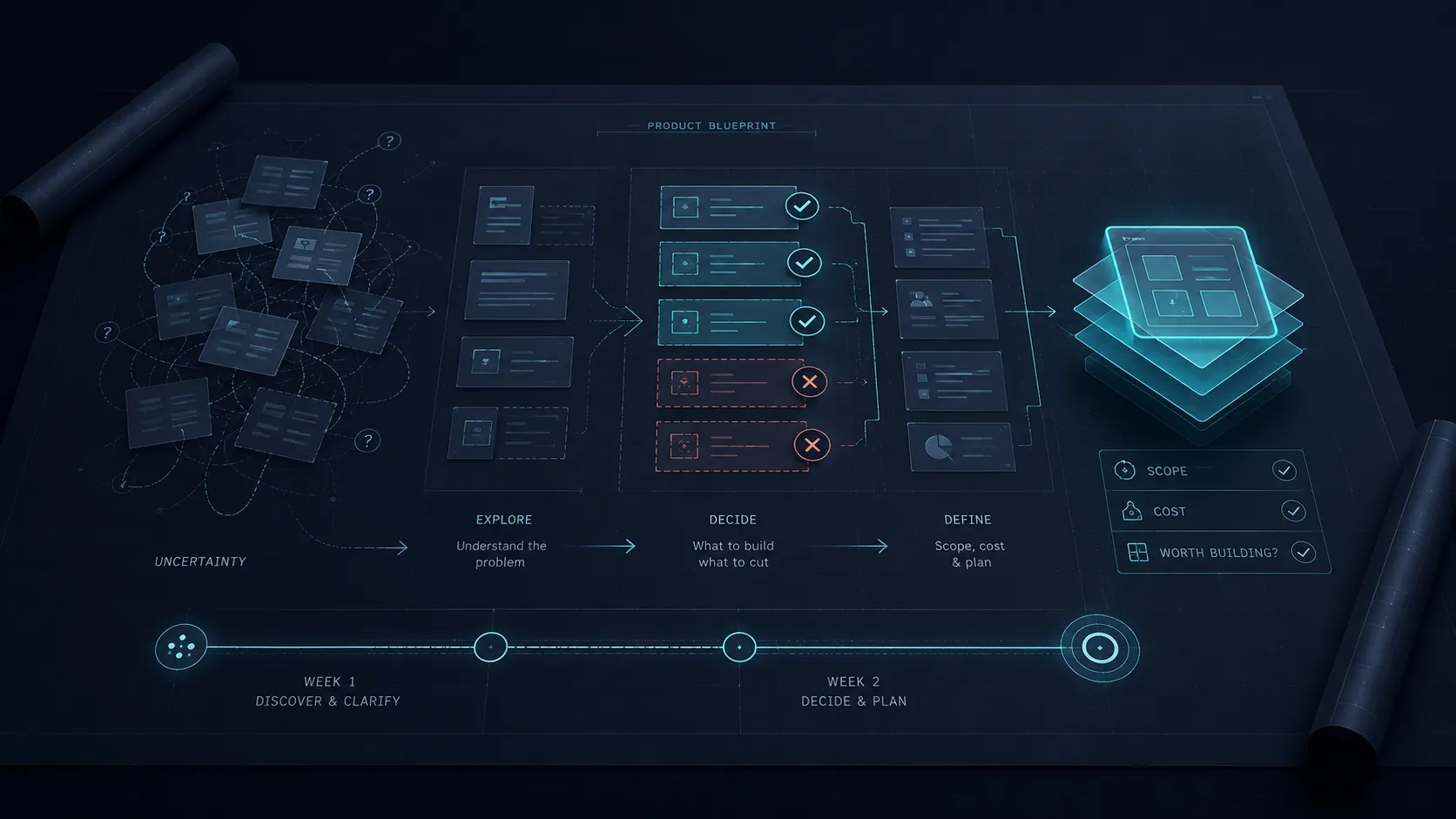
A product blueprint document: the planning sprint that replaces assumptions with decisions before development begins
[ Product Thinking ]

What Is a Product Blueprint? The Fixed-Price Sprint That Decides What to Build

Most software projects fail before a line of code is written. A Product Blueprint is the planning sprint that decides what to build, what it will cost, and whether to build at all, before you commit development budget.

10 August 2026·9 MIN READREAD →
A balance scale tipped toward a huge pile of blue code cards on the left, outweighing a single glowing red human figure on the right
[ Product Thinking ]

The New Software Economics: Cheap Code, Expensive Attention

Code is no longer the moat. As AI collapses the cost of building, the scarce resource shifts to attention earned through solving meaningful problems.
3 July 2026·7 MIN READREAD →
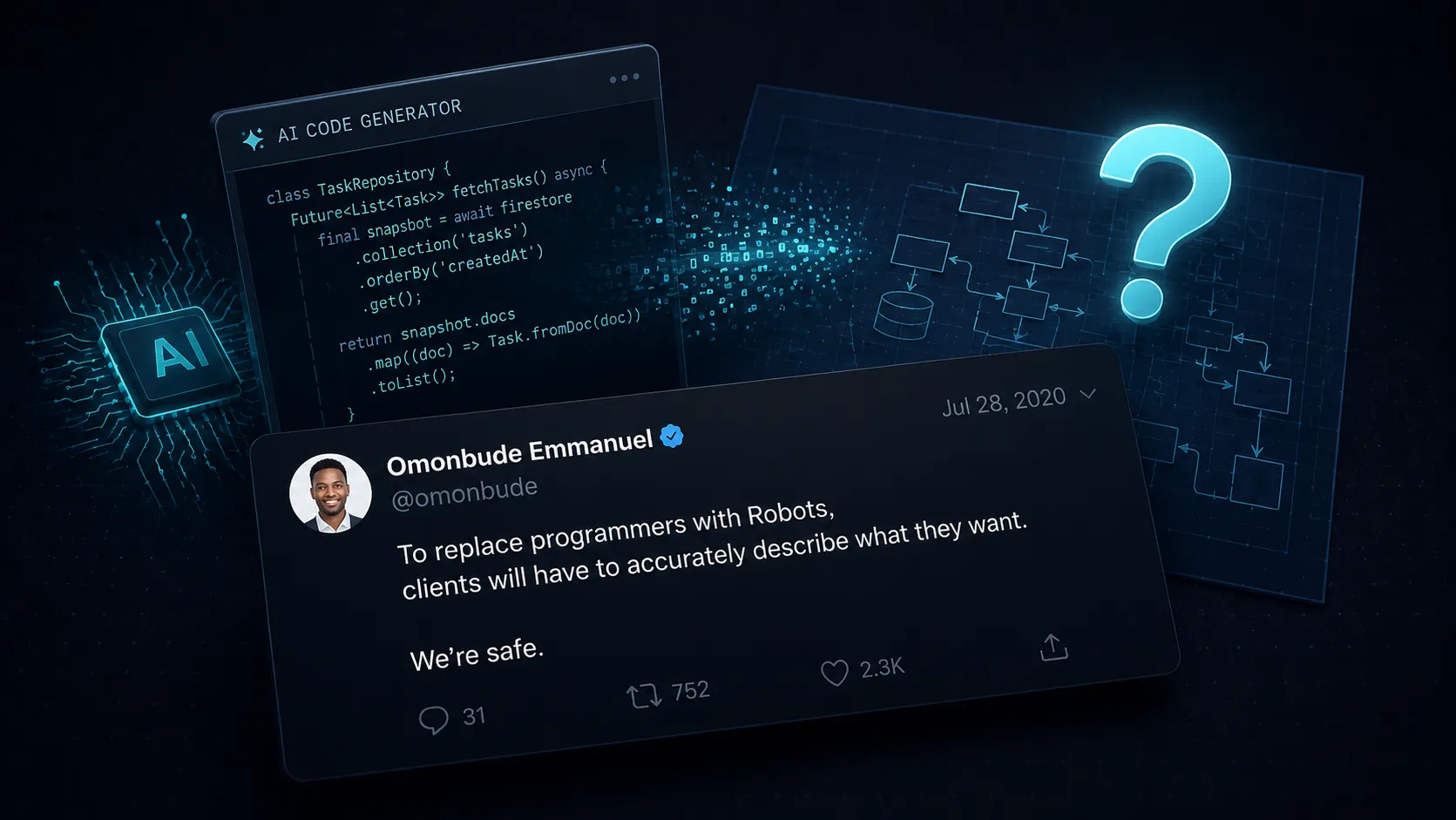
AI code generator, system architecture diagram, and Omonbude Emmanuel's 2020 tweet: to replace programmers, clients must accurately describe what they want
[ Product Thinking ]

AI Can Write the Code. It Still Can't Tell You What to Build.

The risk in 2026 isn't that AI can't write code. It's that we are writing code faster than we can think. Why translation, system design, and precision are the new premiums.
17 June 2026·6 MIN READREAD →
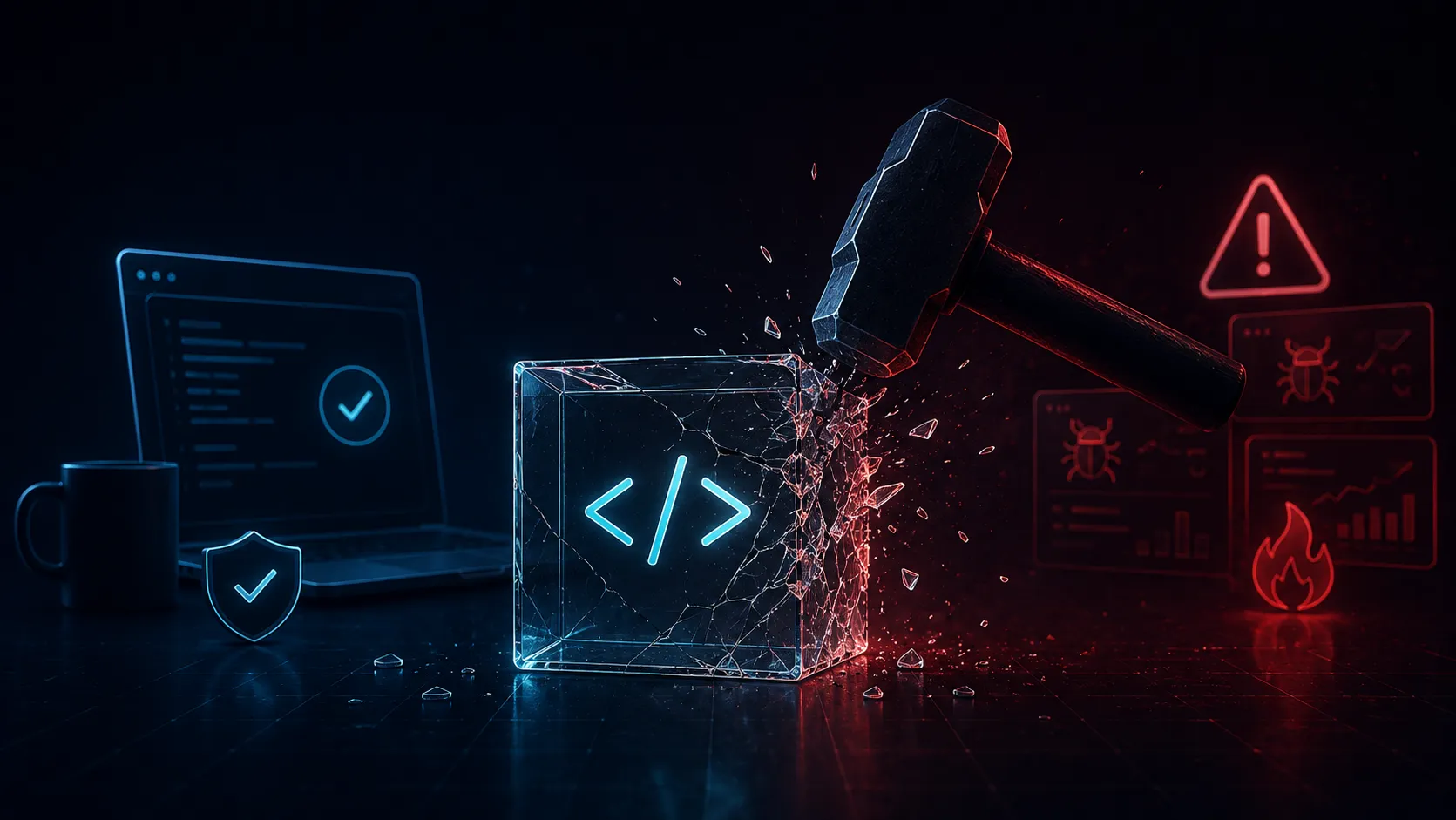
A laptop with a checkmark shield on the left, a glass cube marked with a code symbol being smashed by a hammer in the center, and red glowing bug, warning, and dashboard panels on the right
[ Engineering Discipline ]

The Difference Between Working Software and Production Software

Every developer tests their own code like it's made of blown glass. QA testers bring a sledgehammer. That relationship is the only thing standing between your app and a Friday night production crisis.
8 June 2026·7 MIN READREAD →
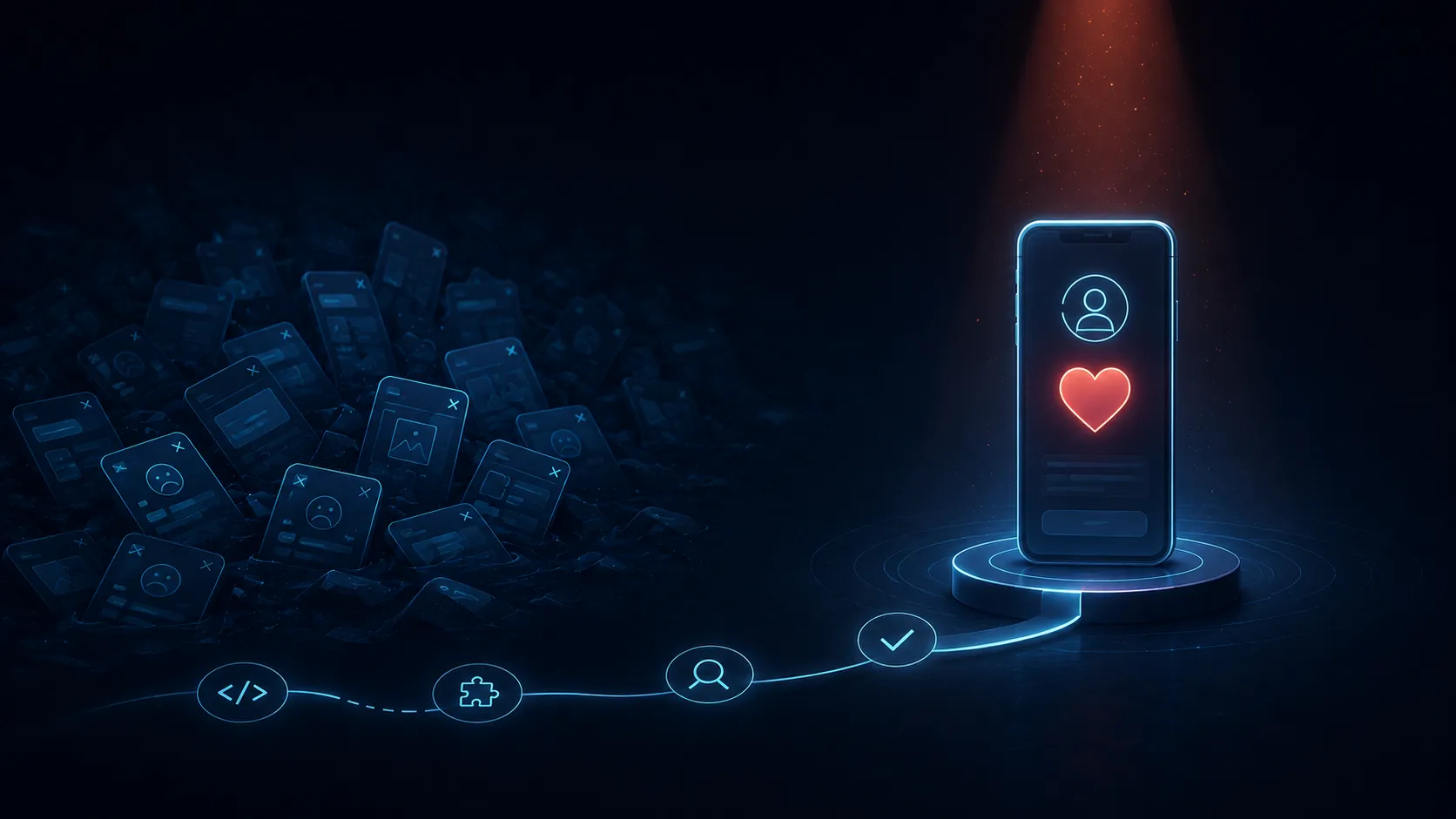
A pile of broken app screens with frowning faces on the left, contrasted with a single phone on a lit pedestal on the right showing a profile with a glowing red heart, connected by a glowing path of code, puzzle, user, and checkmark icons
[ Product Thinking ]

How to Build an App People Actually Use

Three mental models for building something people actually open: bucket of water, pitcher plant, and why the MVP is dead.
28 May 2026·8 MIN READREAD →
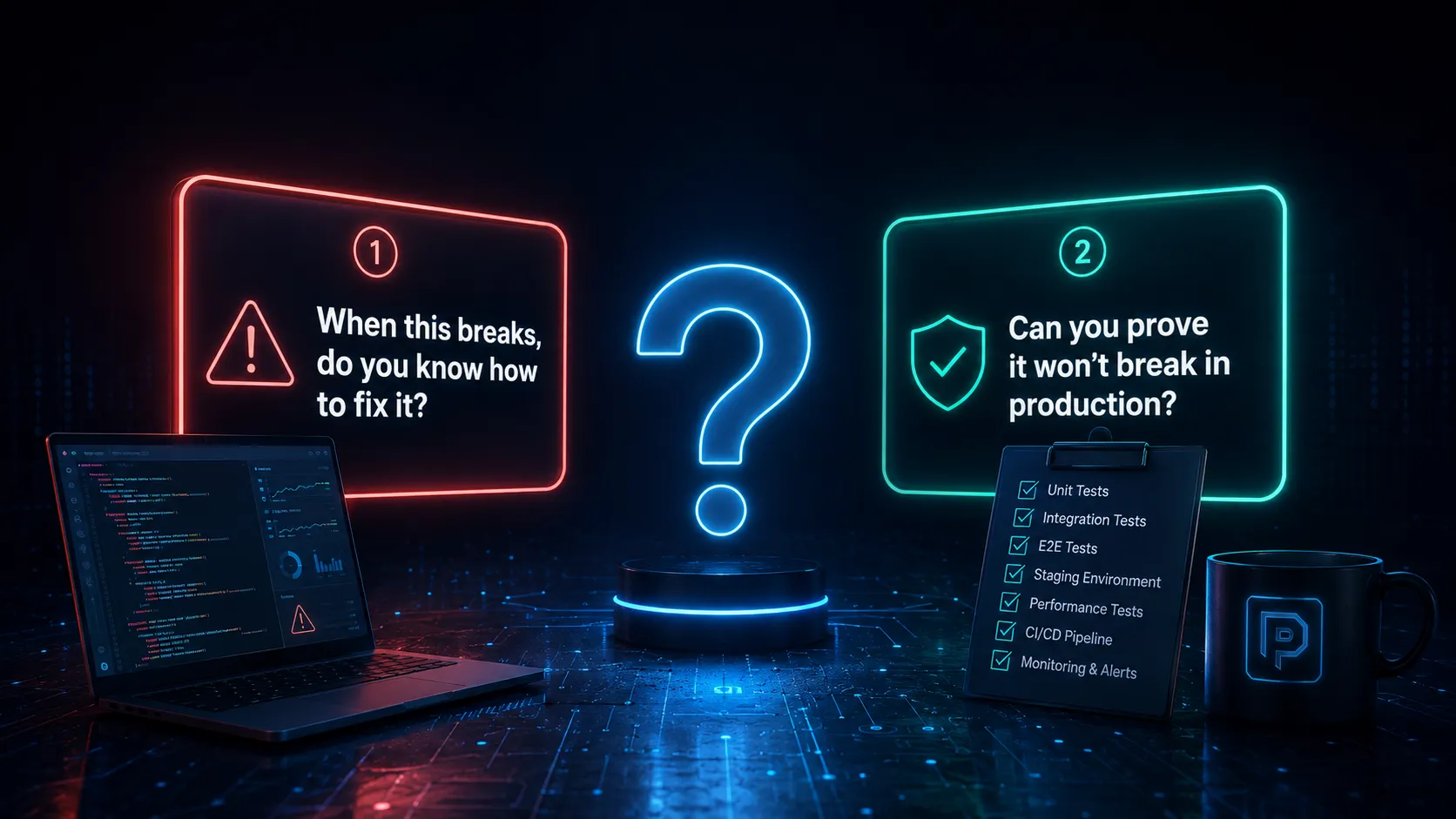
Two framed questions: 'When this breaks, do you know how to fix it?' in red and 'Can you prove it won't break in production?' in green, with a glowing question mark in the center, a laptop on the left, and a testing checklist and mug on the right
[ Engineering Discipline ]

Hiring an App Developer? Two Questions Every Founder Should Ask First

Two diagnostic questions cut through every dev shop pitch. Most app builds fail because the founder picked a team that could ship code but could not engineer software.
27 May 2026·6 MIN READREAD →
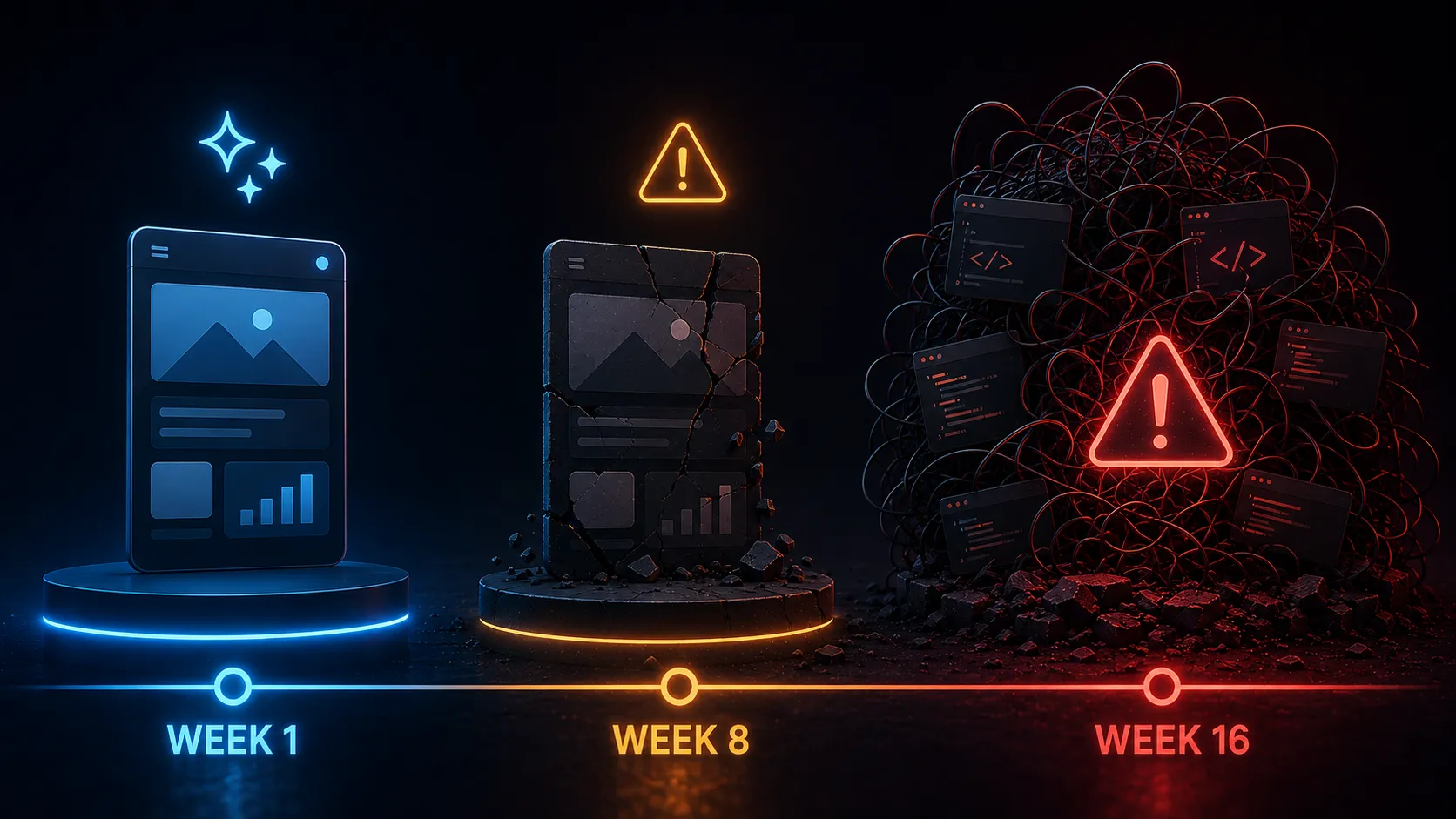
A dark three-stage timeline: Week 1 shows a clean app on a glowing blue pedestal with sparkles; Week 8 shows the same app cracked and crumbling under an orange warning sign; Week 16 shows a tangled nest of wires and code windows with a glowing red warning triangle
[ Architecture ]

Vibe Coding 16 Weeks Later: The Hidden Cost of Building Software on AI Vibes

Vibe coding looks fast in week 1, fragile in week 8, and unrebuildable by week 16. The cost is not burnout. It is poor architecture catching up with you.
13 May 2026·6 MIN READREAD →
Illustration of an AI robot giving a thumbs-up above a clean code window, while tangled beneath the surface are warning, security, database, bug, and time-bomb icons representing the production risks AI misses.
[ Engineering Discipline ]

Working Code Isn't Production-Ready Code: What AI Misses When It Writes Software

An LLM doesn't care if your loop is O(n²). It doesn't care if your dependency has a known vulnerability. It is completing a pattern, not engineering a system. Here is the gap that matters.

29 April 2026·7 MIN READREAD →
> NEXT_COMMAND

Have a build in front of you?

A roadmap call walks through what you're trying to build, what's already there, and what we'd recommend. No charge for the first conversation.

System // Publication

The Hidden Layer

The digital products people experience are shaped by decisions most founders never consider.

The interface is the demo. Everything behind it is the business.

// GET_THE_NEXT_ISSUE

Delivered bi-weekly to your inbox.

BOOK ROADMAP CALL