[ THE_SHORT_ANSWER ]
Working software passes the developer’s own gentle tests. Production software survives an adversarial QA process designed to break it. The difference is not talent; it is discipline: independent testing that finds the failure on a Tuesday in staging instead of a Friday in production.
Developers test their own code with a subconscious tenderness, because they already
know how the feature is supposed to work. We click the buttons one at a time. We type
pristine, perfectly formatted data into the input fields (testuser@gmail.com). We run
our builds on high-end machines hooked up to lightning-fast office fiber internet. On
our local laptops, in the sterile laboratory of the development environment, the
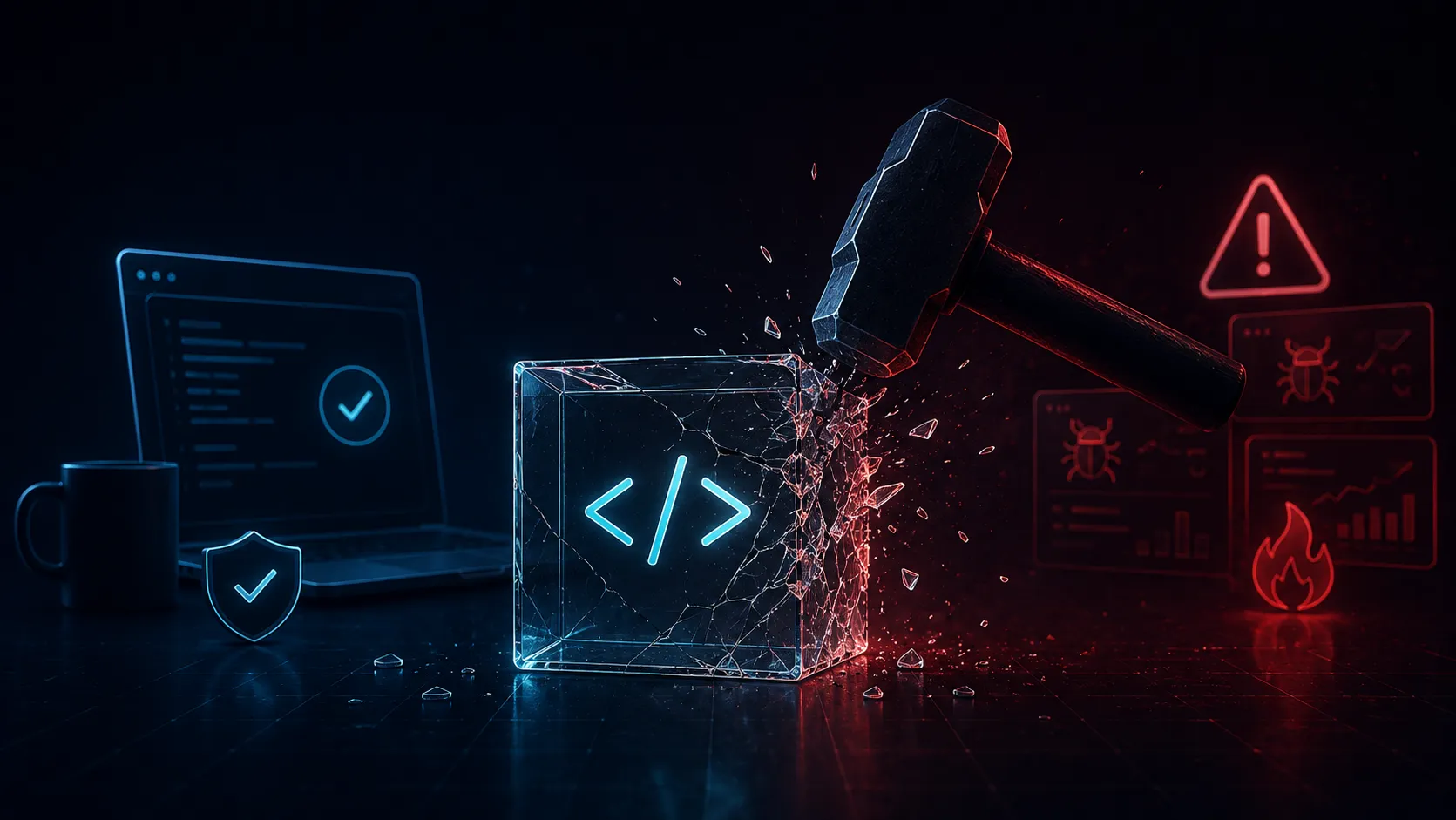
software behaves flawlessly. It’s a beautiful, fragile glass castle.
Then the Quality Assurance (QA) team steps into the room.
They don’t come to admire the architecture. The elegant design patterns, the clean repository, none of it registers. Their entire job description is to see how quickly and violently they can reduce that glass castle to a pile of digital dust.
It is the most structurally adversarial, emotionally bruising, and toxic relationship in software development. It is also one of the main reasons your application stands a chance of surviving past its first hour in production.
1. The Confirmation Bias Trap
The reason developers are historically terrible at testing their own work boils down to basic human psychology: confirmation bias. Research in cognitive psychology shows that people naturally seek information that confirms their existing beliefs while ignoring contradictory evidence. In software development, this manifests as testing only the scenarios we expect to work.
When you spend three days writing a complex data-filtering feature, your brain is wired to prove that your logic works. You implicitly follow the “happy path”, the exact sequence of events that leads to a successful outcome. You know where the invisible lines are, so you don’t cross them.
This pattern shows up in almost every troubled project we get called in to rescue. Developers want the code to work; QA testers want to see it fail. They are driven by a different kind of curiosity. They look at a freshly built feature and ask a dark, chaotic question: What happens if I try to ruin this?
Where a developer sees a clean user flow, a QA tester sees a stress test:
- The Race Condition: The developer clicks “Submit” once and waits for the API response. The QA tester clicks “Submit” 50 times in one single second to see if they can bypass state management and trigger a duplicate database entry.
- The Payload Stress Test: The developer uploads a crisp, 200KB JPEG for their profile photo. The QA tester attempts to force-feed the system a 5GB raw PDF to see if the server chokes, runs out of memory, and drops offline.
- The Network Interruption: The developer tests under perfect network conditions. The QA tester hits the “Pay Now” button and immediately toggles the device into airplane mode mid-transaction to see if the backend architecture handles a partial write gracefully or accidentally charges a user without updating their status.
This isn’t just thorough testing; it’s a controlled demolition. It hurts to watch your build get systematically torn apart by someone who found an edge case you didn’t even know was mathematically possible. But that hurt is what turns raw code into a resilient, scalable product. None of those scenarios are exotic. They are the product’s daily reality: the argument we make in The Edge Cases Are the Product .
2. Why “Working Code” is Not “Production-Ready Code”
This adversarial dynamic has always been important, but in 2026, it has become an absolute necessity for survival.
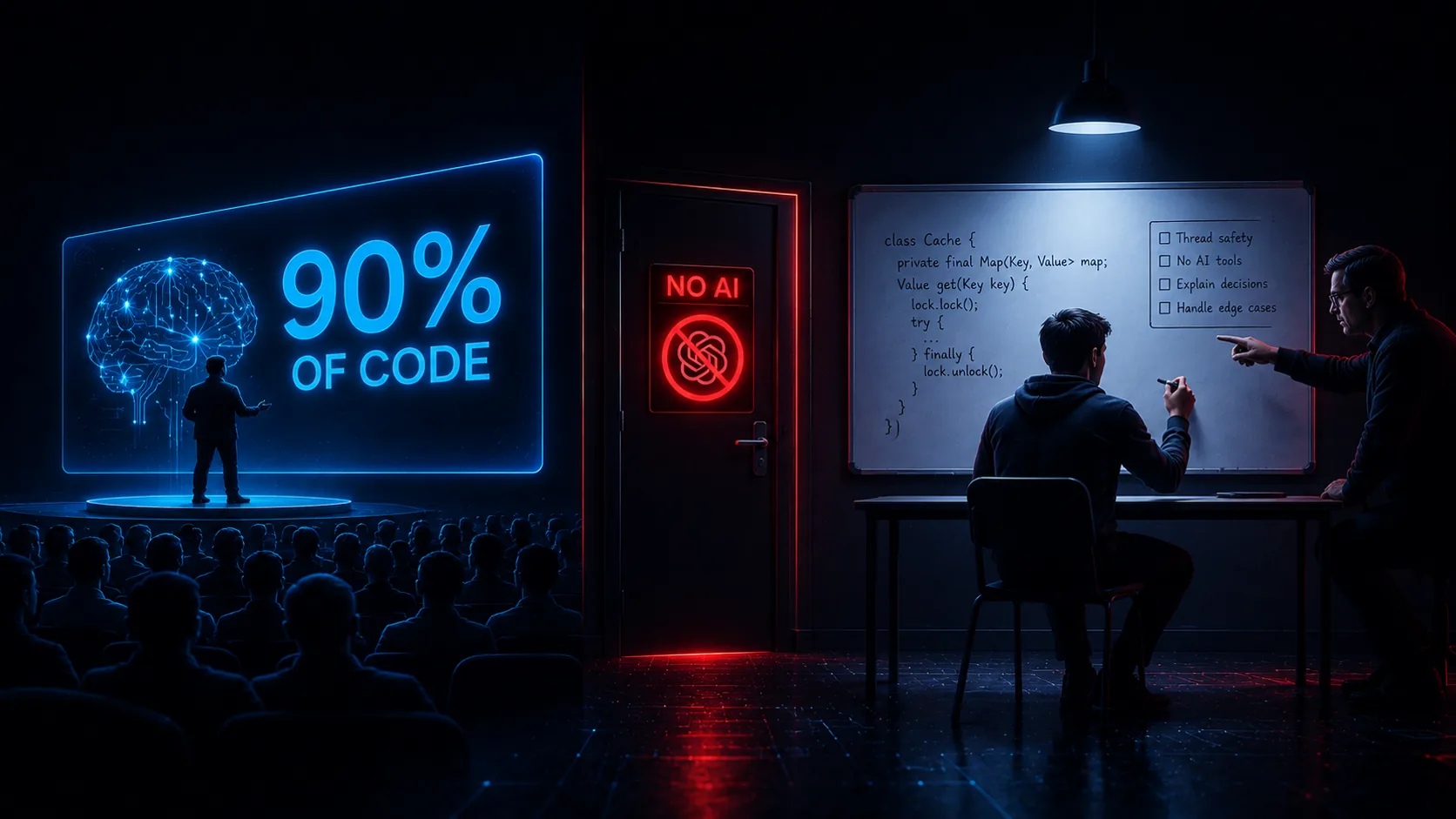
The barrier to generating code has dropped to near zero. AI tools can spit out functional app prototypes from a text prompt in twenty minutes. According to the Stack Overflow 2025 Developer Survey , over 84% of developers now use AI coding assistants in their workflow. Vibe coding allows teams to bolt feature after feature onto a codebase at breakneck speed.
But AI models are the ultimate happy-path optimizers. They complete patterns based on standard, textbook execution. What they miss are the unwritten, messy failure modes of the real world. They don’t anticipate the erratic, unpredictable behavior of a human user who is frustrated, distracted, or operating on a spotty mobile connection in a subway tunnel.
The Reality Check: Working code runs fine on a developer’s laptop. Production-ready code survives contact with actual, unpredictable humans.
If you rely entirely on generated code and casual manual testing by your dev team, you are shipping a black box that has never experienced a bad day. The moment that software hits live production, real users will inadvertently act exactly like a hostile QA team. If your QA team doesn’t break your application first, your users will.
3. The Math of Tuesday Staging vs. Friday Production
Every software project eventually faces a choice about where they want to pay their stability tax. You can either pay it in the privacy of a staging environment, or you can pay it under the glaring lights of live production.
The business economics of catching a bug scale exponentially depending on when it gets caught. Research by the NIST Planning Report 02-3: The Economic Impacts of Inadequate Infrastructure for Software Testing and IBM demonstrates that resolving a defect in production costs up to 100 times more than correcting it during the initial design phase. The multiplier varies by study, but the principle is universal:
Phase | Detection Cost | Business Impact | Team Stress Level |
|---|---|---|---|
| Tuesday Staging | Localized patch code | Zero external impact | Low (minor dev grumbling) |
| Friday Production | Emergency hotfix rollback | Brand damage, lost revenue | High (nobody’s off the clock) |
When a QA tester breaks your app on a Tuesday staging server, it costs you nothing but a developer’s ego. The team captures the bug in a sandboxed environment, logs a ticket with structured logs attached, and quietly patches it before anyone outside the company ever knows it existed.
When a user breaks your app on a Friday afternoon production launch, the cost compounds. Payments fail. Customer support queues explode. Your engineering team is pulled out of their weekend to run a frantic diagnostic on an active incident, and now you’re managing a minor brand crisis, not just fixing code.
Someone, somewhere, will eventually find the exact permutation of actions that exposes the structural weakness of your architecture. It costs a lot less when that someone is your QA team on a Tuesday than when it’s your users on a Friday.
4. The Founder’s Blind Spot: Demos vs. Reality
As a founder or product leader, you are almost always insulated from this relationship.
You don’t see the structural arguments between engineering and testing. Instead, you see the clean demos. You see the green checkmarks in Jira. You see the polished Loom recordings sent over at the end of a sprint where everything works beautifully.
It is easy to mistake a smooth demo for an engineered product. Data from the Standish Group’s CHAOS 2020: Beyond Infinity has documented for decades that only about 31% of software projects succeed outright, with inadequate testing and unclear requirements consistently among the leading drivers of project failure. A polished demo tells you almost nothing about production readiness.
Most founders never see their testing process because they assume that if the demo looks right, the code under the hood must be solid. But a demo is just a script. It doesn’t tell you what happens when your system hits 1,000 concurrent users, or when an external API changes its response shape without warning, or when an edge case causes a fatal memory leak.
What you don’t see is whether anyone has actually tried hard to break the system. Software shipped without a rigorous, independent QA process that challenges the code isn’t a resilient application. It’s a fragile assumption that hasn’t been tested yet.
Engineering is What Survives
The question isn’t whether bugs exist in your codebase. Every complex system has bugs. The question is whether your team has designed a system engineered to discover them before your customers do.
That is the difference between writing code and engineering software. At Pocket Dev, we use advanced AI tools to accelerate our development velocity, but we build walls around our execution with strict, human-driven engineering discipline.
We don’t quote blind, and we don’t ship on the strength of a demo alone. Every serious software project requires an objective, independent look at its architecture, failure modes, and deployment strategy before it’s ready to scale.
- If you are preparing for a major build: We start by scoping it properly . It’s a dedicated, fixed-price architectural sprint where we map out an uncompromised delivery plan, unmask the edge cases, and define exactly how the application will hold up under production conditions.
- If you have an existing application that is already cracking: We run a Rescue . We step into the project to audit the system, diagnose why it’s misbehaving, stabilize the architecture, and clear out the technical debt that’s holding you back.
It’s a disciplined, sometimes painful process: turning down premature feature bloat, investing in the craft nobody sees. It might mean a feature gets sent back to the drawing board on a Tuesday afternoon. But you’ll sleep soundly on Friday night knowing that whatever went live has already survived a beating.
Your testers deserve more credit than they usually get. The bugs they find this week are the ones your customers and your business never have to deal with later.
[ NEXT STEP ]
Ready to build software that survives contact with real users?
The Product Blueprint is a fixed-price architectural sprint that maps your delivery plan, stress-tests your architecture before a line of production code is written, and defines exactly how the application holds up when things go wrong.
BOOK_A_ROADMAP_CALL →